Engineering Articles
Technical deep dives from the Elastcode team. How we build with our own compiler, database, and protocol.
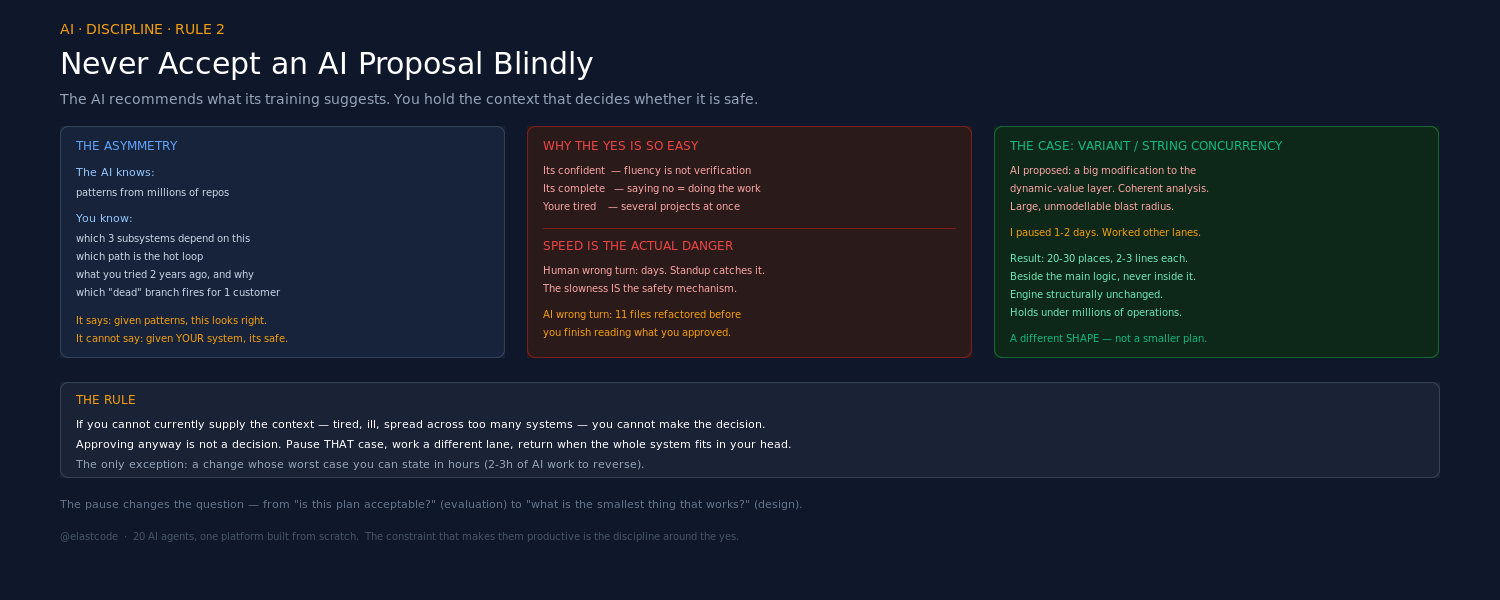
Rule 2: Never Accept an AI's Proposal Blindly
An AI recommends what its training suggests; you hold the context that decides whether it is safe. Why the yes is so easy, why AI speed is the real danger, and the case where a two-day pause turned a large risky rewrite into 20 lines across 30 places.
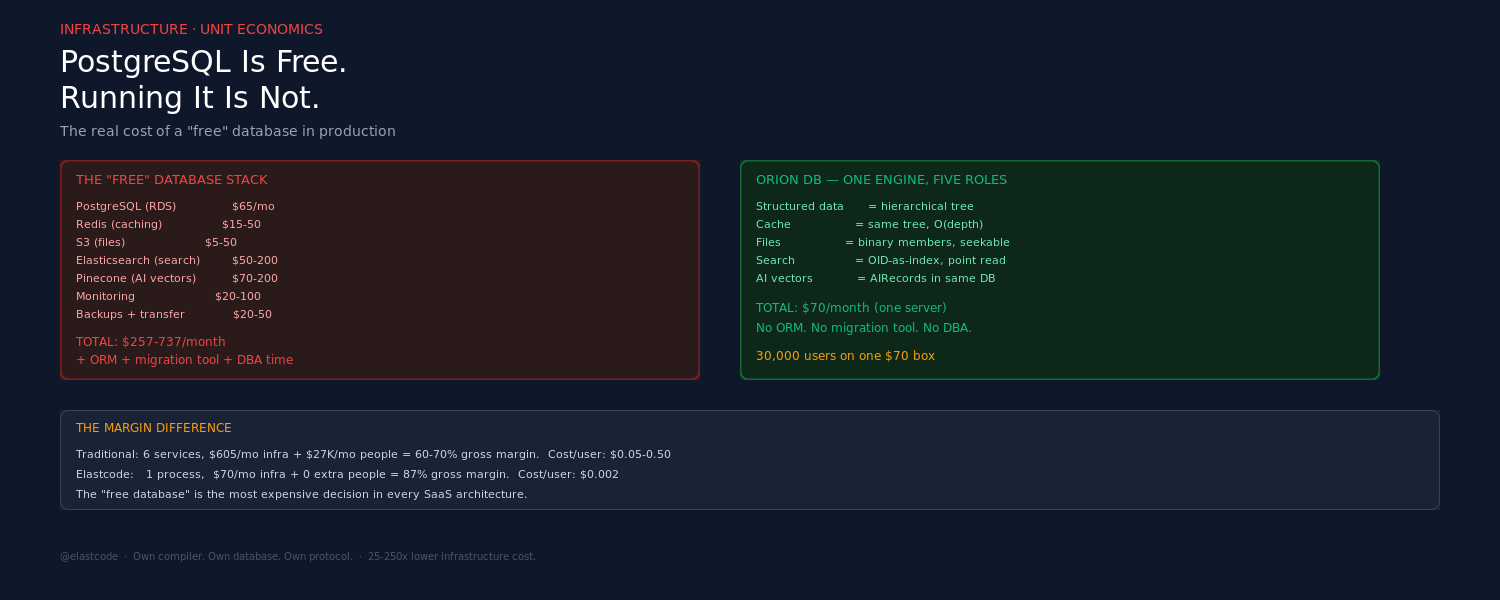
PostgreSQL Is Free. Running It Is Not.
The real cost of a "free" database: PostgreSQL + Redis + S3 + Elasticsearch + Pinecone = $257-737/month + ORM + migration tool + DBA. We replaced it all with one engine at $70/month for 30,000 users.
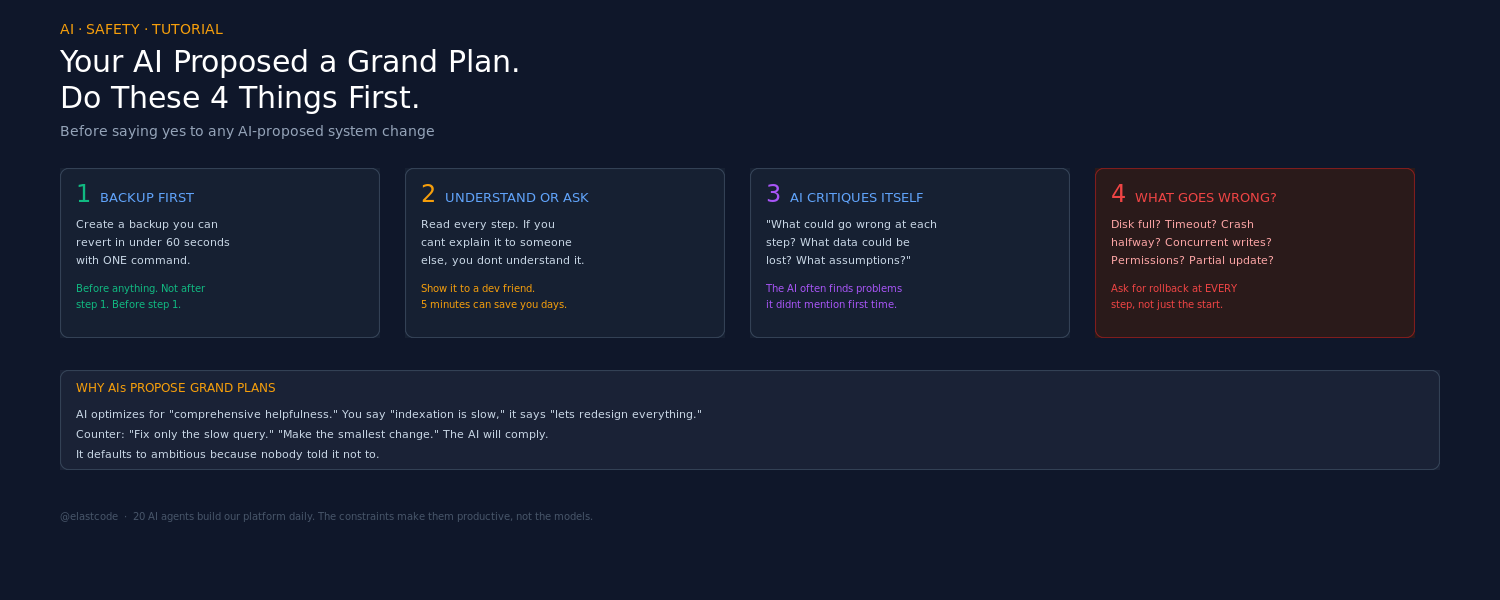
Your AI Proposed a Grand Plan. Do These 4 Things First.
Before saying yes to any AI-proposed system change: backup you can revert in 60 seconds, understand every step, make the AI critique itself, anticipate real-world failures. A practical guide from running 20 AI agents daily.
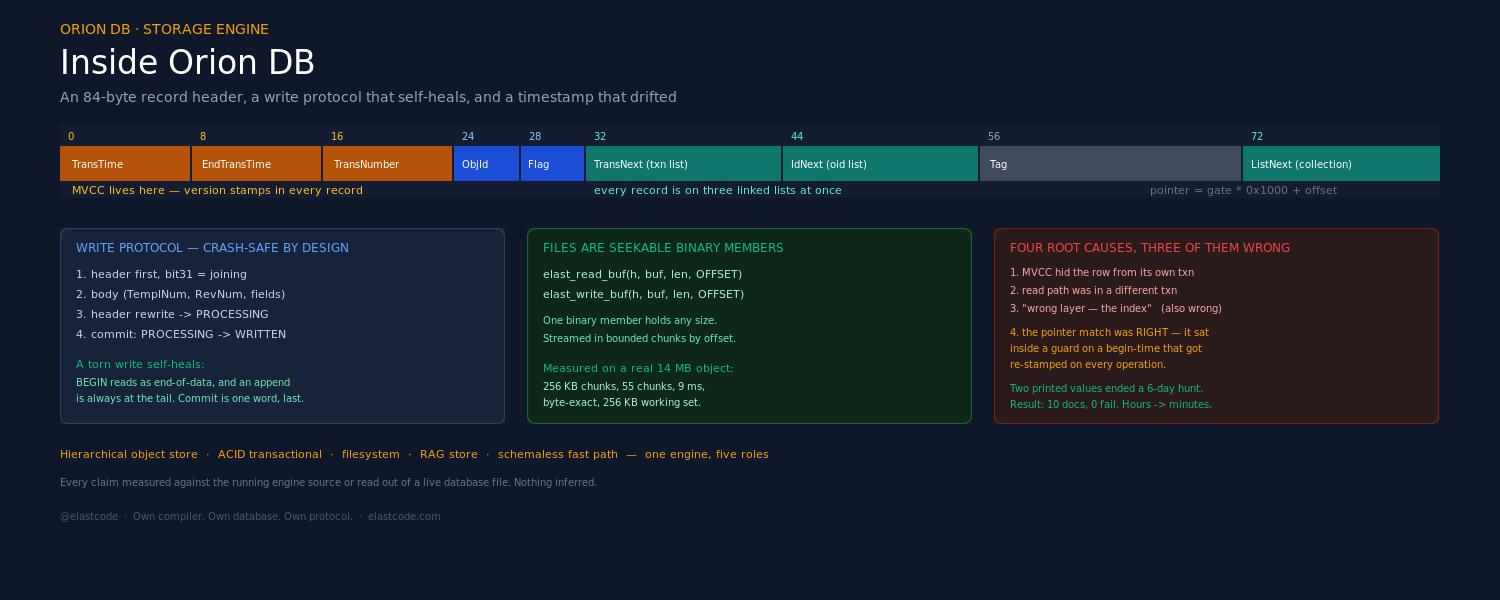
Inside Orion DB
What is actually inside a database engine we wrote ourselves: the 84-byte record header with MVCC in it, a write protocol that self-heals torn writes, offset-seekable file members, an O(1) seek table one line had switched off, and the four-root-cause hunt for read-your-own-writes.
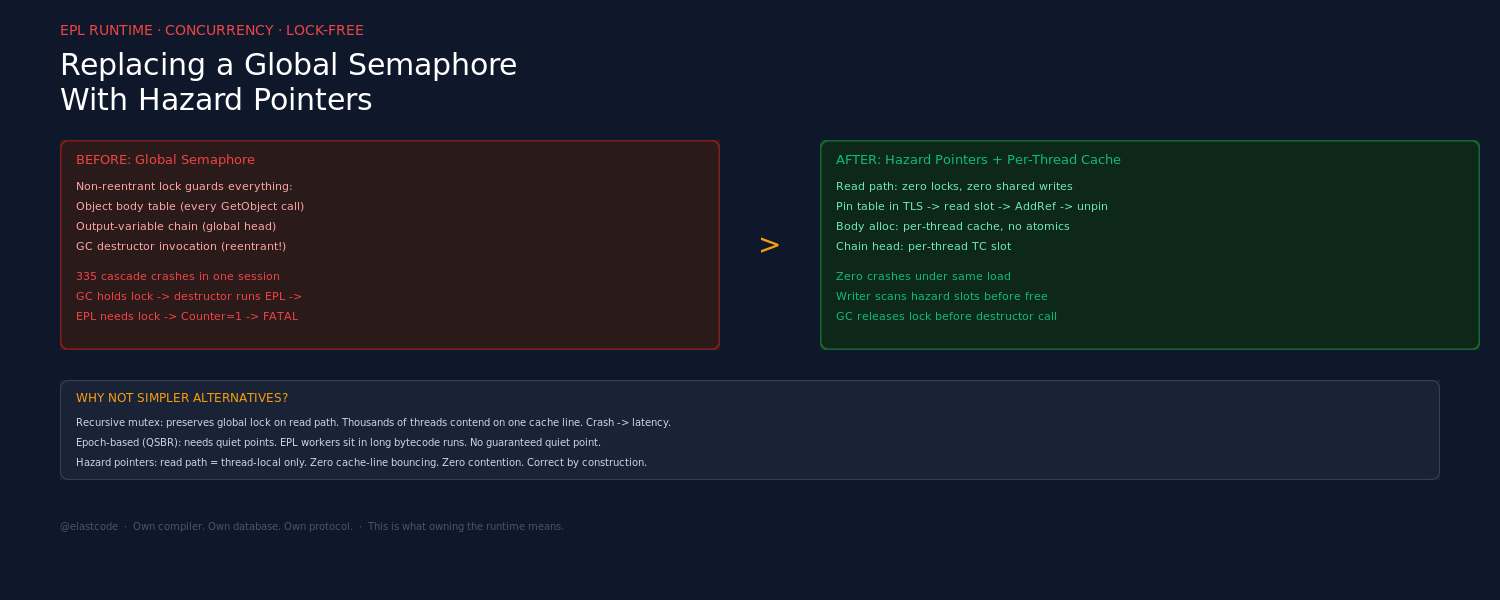
How We Replaced a Global Semaphore With Hazard Pointers
335 cascade crashes per session. A non-reentrant lock in a JIT runtime. Why recursive mutex is wrong. Hazard pointers + per-thread caches = zero crashes under the same load.
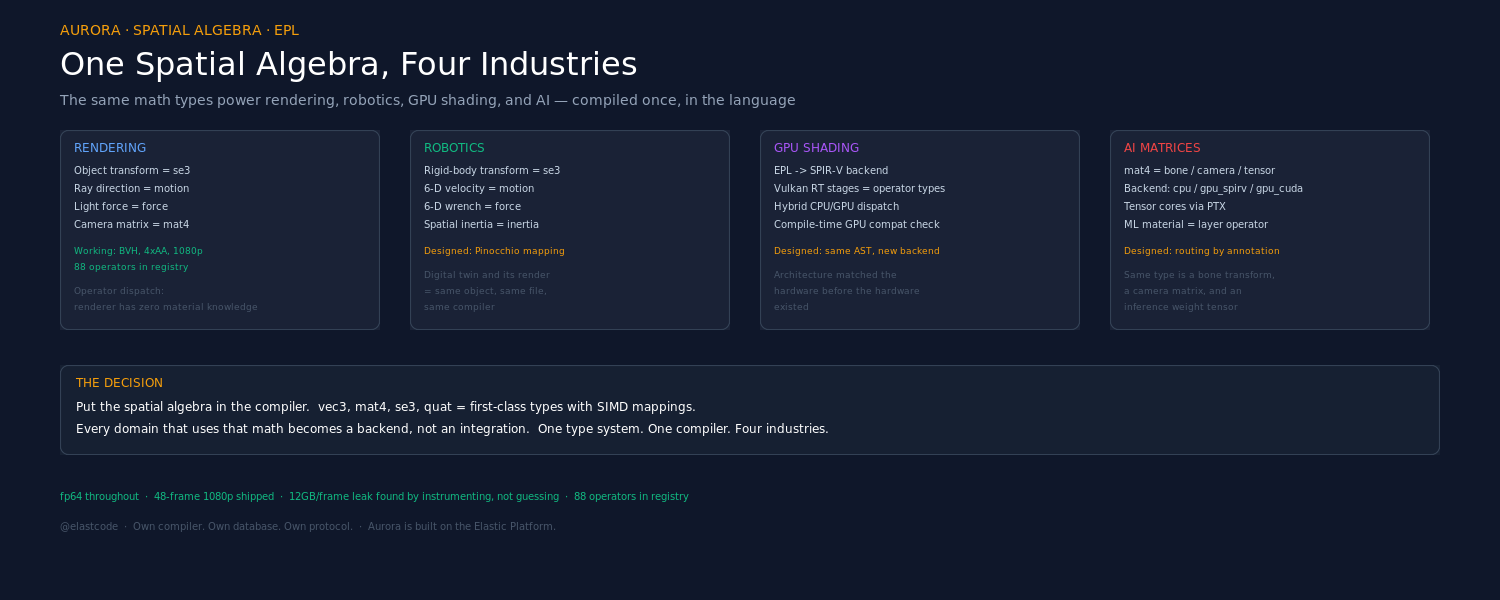
One Spatial Algebra, Four Industries
Why a robot arm, a ray tracer, a GPU shader, and an AI model are the same math. Compiler-level spatial types, the RenderMan operator model, SPIR-V/Vulkan RT mapping, and what works today vs what's designed.
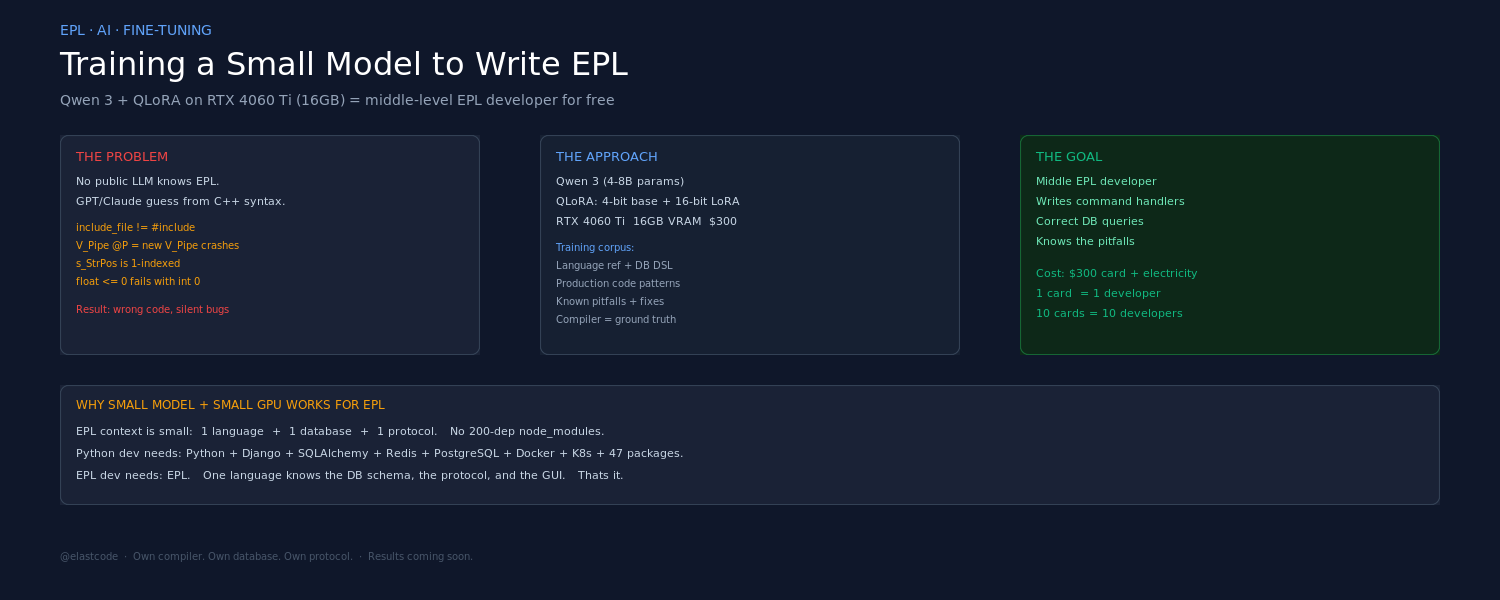
Fine-Tuning Qwen 3 to Be a Middle EPL Developer
Training a small language model to write code in our own programming language. Qwen 3 + QLoRA on a $300 GPU. Why EPL's small context makes this possible. Results coming soon.
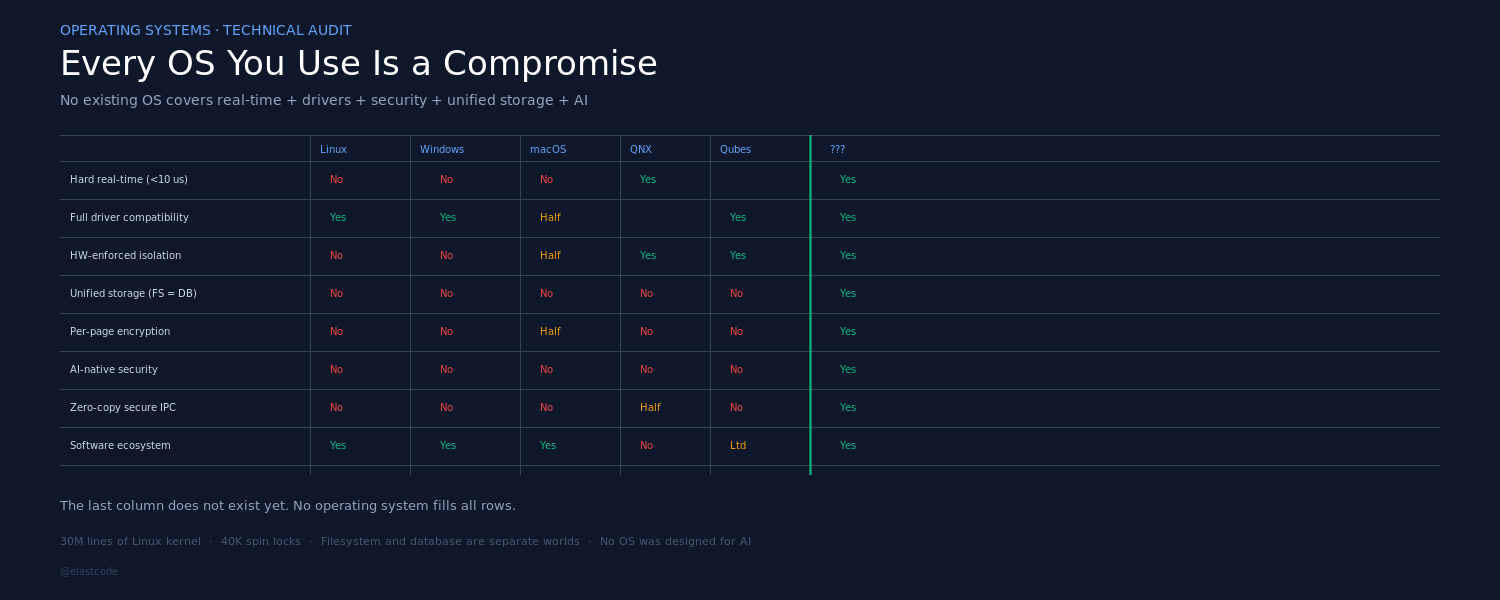
Every Operating System You Use Is a Compromise
A technical audit of Linux, Windows, macOS, QNX, and Qubes. Why no existing OS covers real-time + drivers + security + unified storage + AI. The gaps nobody fills — and what it would take.
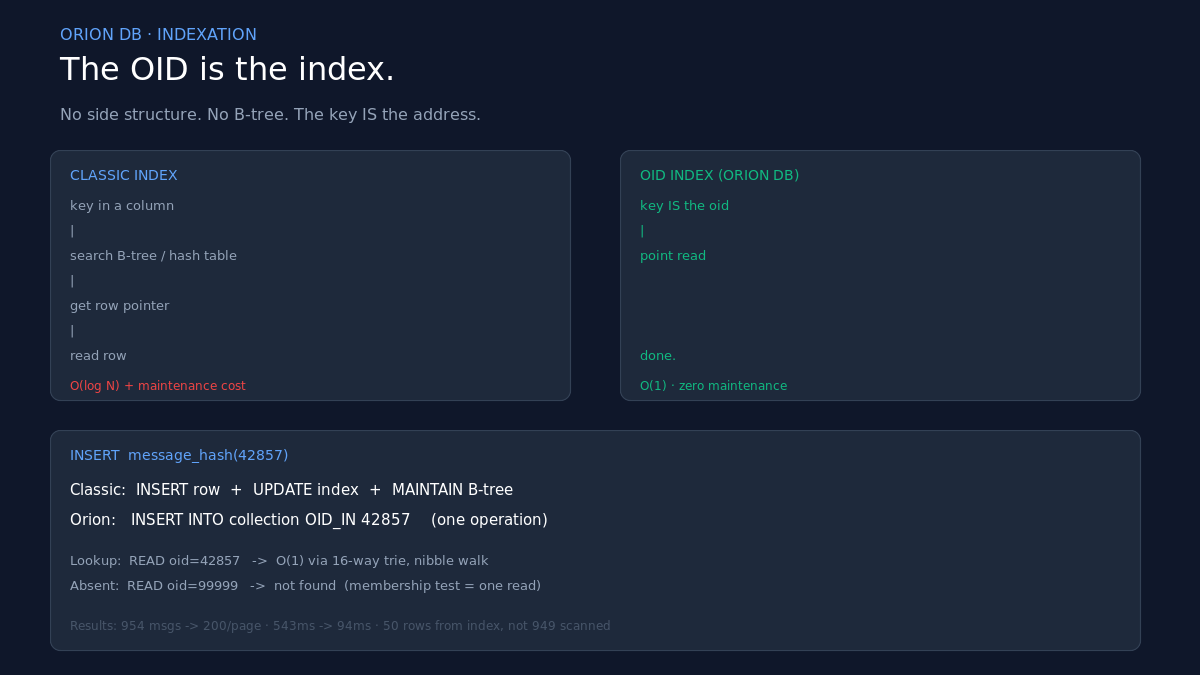
We Made the Primary Key the Index
How Orion DB turns an object ID into a zero-maintenance search structure — and the silent 32-bit wall we hit along the way. The OID-as-index pattern, 543ms to 94ms, and four things the AI got wrong.